
Religion and Politics
Why are ‘values’ at the core of the political debate? It is because values are no more anchored in traditional and national cultures but are reconstructed around normative systems. The populist counter revolution pretends to ‘cancel’ wokism and return to a more traditional society, based on the model of a Christian family. Our research shows that in fact, the process of deculturation and post liberal normativity is at work both in the ‘woke’ and populist movements. Wokism has deconstructed what it sees as a western anthropology. But the populist movements are unable to restore any kind of anthropology: on one hand most populists have endorsed the secular, hedonist individualistic way of life produced by the sixties (they just don’t want to share it with migrants). On the other hand, the illiberal narrative is turning towards an apology of ‘natural law’, ‘common sense’ and ‘Christian identity’; in a word it refers to a lost Christian anthropology that contradicts the way of life of its own constituents. Nevertheless, there is no such a thing as a ‘Christian anthropology’ except the model put in place by the Council of Trent. The fundamentalist protestants are stuck into a normative system that does not constitute a polity and the Catholic Church cannot promote a traditional model of Western Christianity without destroying itself as a global and universal religious institution. The High-tech establishment is not interested in actual societies and has acknowledged the gap between a new elite and a increasingly dispensable population.
We explore the development of these tensions in the course of the accession of populist movements to political power.
- What role for a global Catholic Church?
- Can there be a cultural counter-revolution, in a time when the very concept of anthropological culture is put into question and when “high culture” is in jeopardy?
- Populism and the clash of values: how to conciliate the defence of a western “way of life”, the resurgence of a normative Christian fundamentalism and the rise of a high-tech post-humanism?

The rise of populism goes not with a rise of religion, but with an increase of dechristianisation. The shift to the right, in terms of elections, do not correspond to a shift towards rightist conservative values among the population.

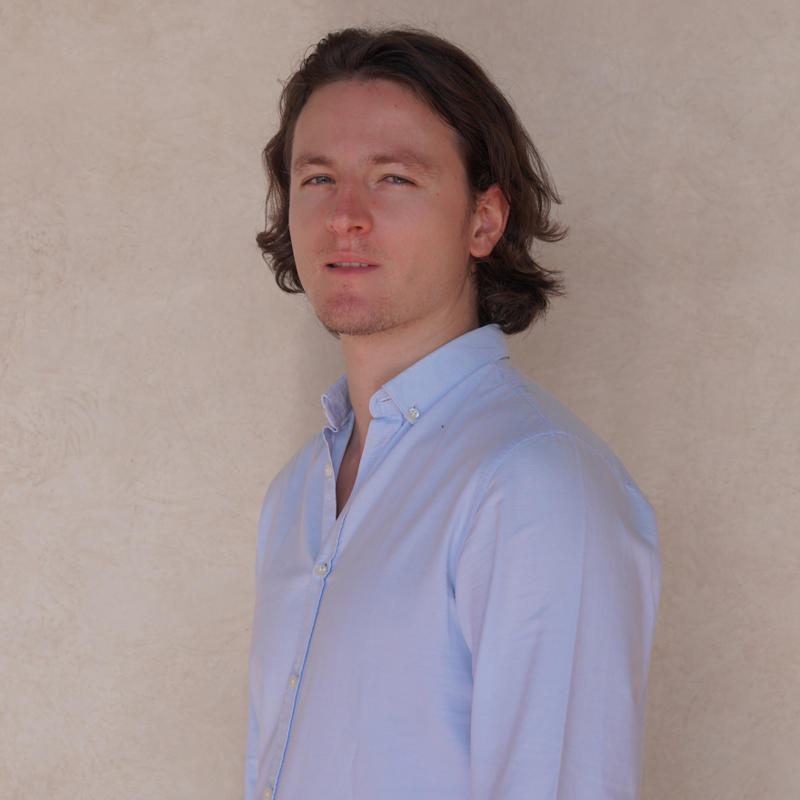
Olivier Roy
Professor, Director of the Religion and Politics research area, Joint Chair at the Department for Political and Social Sciences and the Robert Schuman Centre for Advanced Studies., and Adjunct Professor at the Florence School of Transnational Governance